
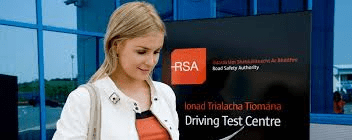
Embarking on your Irish driving test journey can feel daunting, but preparation is key. At Testroutes.ie, our goal is to help you navigate exactly what the examiner expects — from Irish road signs and Irish driving test questions to the essential technical checks Irish driving test. In this post we’ll break down each area, offer tips, and show you how to use our site to your advantage.
1. Why Irish Road Signs Matter More Than You Think
Before you ever start the engine, one of the first things you’ll be asked to demonstrate is your knowledge of Irish road signs. Recognising and understanding road signage is not just a theoretical requirement — it ensures you drive safely, obey the rules, and respond correctly to changing road conditions.
In Ireland, road signs fall into several broad categories: regulatory, warning, informational, and motorway signs.
Regulatory signs (often circular) tell you what you must do or must not do — for example, speed limits or no entry.
Warning signs (yellow diamond shapes in Ireland) alert to hazards ahead — such as sharp bends, junctions, or animal crossings.
Informational/directional signs guide you with place names, distances, motorway exits, etc.
Motorway signs are typically blue, and include lane, exit, and distance signs.
Because hazard signs in Ireland use a yellow diamond style (rather than red-bordered triangles as in many other European countries), learners from abroad can sometimes miss the difference.
To dive deeper into every route-sign category and to test yourself, visit our dedicated Irish road signs page:
Irish Road Signs at Testroutes.ie
Quick Tips for Learning Road Signs
Use flashcards or mobile quizzes to test recognition under time constraints.
While driving (or as a passenger), play a “spot the sign” game to reinforce recognition.
Pay attention to dual-language signs — in many areas, you’ll see Irish (Gaeilge) above English. Wikipedia
Regularly revisit the full sign list before your test to avoid surprises.
2. Cracking Irish Driving Test Questions
The theory portion of the test (or the question portion included in the practical) will probe your understanding of road rules, signage, hazard perception, and situational judgment. These Irish driving test questions are not just trivia — they reflect real situations you’ll face on the road.
Here’s how to approach them smartly:
Read carefully: Many questions are scenario-based. Don’t rush — identify exactly what the question is asking (e.g. “when turning left at a junction…”).
Use elimination: If one answer is clearly wrong, eliminate it first, then choose from the remainder.
Relate to signs and conditions: Often, your road sign knowledge will help you deduce the correct answer.
Time yourself: Practising under timed conditions helps simulate test pressure.
On our Driving Test Questions page, you’ll find sample questions, explanations, and tips tailored to Irish rules:
Irish Driving Test Questions Resource
Some common topics you’ll see:
Right of way at junctions
Overtaking rules
Speed limits in various zones
Rules for roundabouts and mini-roundabouts
Hazard perception and reaction
A tip from learners: many times you’ll see a few standard sign questions such as “clearway,” “pedestrian zone,” “no entry,” or “roundabout ahead” being repeated in multiple tests. Being confident on these pays off. Reddit
3. Technical Checks: What You Need to Know Before Your Test
Before the examiner drives off, you’re expected to demonstrate a few technical checks — simple but important tasks that show you know how to safely maintain your vehicle. These checks prove you understand basic safety and mechanical awareness.
Some of the typical items include:
Checking tyre pressure and tread depth
Ensuring your lights (dipped, main beam, indicators, fog lights) function
Confirming oil level, brake fluid, coolant, windscreen washer fluid
Handbrake and footbrake operation
Checking horn, seatbelt condition, and mirrors
The examiner may ask, for example: “Show me how you’d check your tyres” or “Show me how you’d check the brake lights.” You explain what you’re doing while performing the check. It’s not expected you open the engine bay while driving — the checks should be done before moving.
Visit our full Technical Checks guide here at Testroutes.ie:
Technical Checks for Irish Driving Test
Tips for Acing Technical Checks
Memorise a checklist — have a mental order (e.g. tyres → fluids → lights).
Practice physically doing the checks on your car until you are smooth and confident.
Speak out loud — explain what you are checking, why, and what a bad reading would indicate.
Don’t rush — in most cases, you aren’t being timed on these, so accuracy matters more than speed.
4. How It All Comes Together on Test Day
So how does your knowledge of Irish road signs, your mastery of Irish driving test questions, and your fluency with technical checks combine in a successful test?
Opening questions: Often, right at the start, the examiner will ask you about signs, or ask for a technical check (e.g., “Can you show me your left indicator is working?”). Being fluent from the first minute shows confidence.
While driving: You’ll need to interpret signs in real time (e.g. a sharp bend warning, speed reductions, or school zones) and react appropriately. Mistaking a sign or failing to act on it can lead to deductions.
Mid-test questions: At some point during the drive, the examiner may ask mid-drive questions (e.g. “If you see that sign ahead, what does it mean and what would you do?”) — a direct test of your signage knowledge in context.
Technical check at end or start: Before or after driving, you’ll perform a brief check (lights, tyres, etc.). This is a small but checkable task where clarity and confidence help leave a good impression.
5. Study Strategy & Final Tips
To maximise your chance of passing your test, here’s a suggested study path:
| Phase | Focus | Practice |
|---|---|---|
| Early | Learn and visualise all Irish road signs | Use flashcards, Testroutes.ie signage quizzes, on-road sign spotting |
| Mid | Drill through Irish driving test questions | Take timed mocks, review wrong answers |
| Later | Perfect technical checks | Walk around your car daily doing the checks smoothly |
| Final week | Mixed practice | Simulate full test, drive with a mock examiner, revisit tricky signs or questions |
Other final tips:
Stay up to date — rules or speed limits can change (for example, rural speed limits or local restrictions).
On test day, stay calm. Confidence helps your decision-making when reading signs or answering questions under pressure.
If you make a slip, don’t panic — small errors don’t always fail you, but repeated incorrect reactions do.
After the test, review any errors to reinforce learning for the future (or for the next test attempt).
Conclusion
Passing your driving test in Ireland involves more than just being able to drive. You must:
Recognise and respond to Irish road signs accurately,
Answer scenario-based Irish driving test questions confidently, and
Perform the essential technical checks Irish driving test requires.
At Testroutes.ie, we’re here to support you at every step — from signage tutorials to practice Q&A to checklists for tests. Use our resources:
With steady study, consistent practice, and careful review, you’ll walk into test day confident and ready. Good luck on your test — may your driving journey begin smoothly and safely!

